beautiful bookbinding

On Sunday we went to see two fabulous exhibitions at another of Manchester's famous libraries, the John Rylands. 'Kyffin: A Celebration' showed fifty bindings of a collection of essays on Welsh artist Sir Kyffin Williams, each one different, yet as a whole a remarkably coherent display. Slate, leather, thread, metal, fabric and glass had all had been used to somehow represent the wild landscape of Wales that KW is known for. As you know, I love books: they create a kind of mesmeric state of mind in me, and I longed to be able to touch the paper, string and silk. I love the fine skill and neatness of bookbinding techniques. Hours of work goes into bookbinding: it is an incredibly labour-intensive craft, so not surprisingly these hugely expensive examples were sensibly kept away from curious fingers like mine behind glass cases.

My favourite bindings were those of Angela James, who is a new discovery for me: her work has an organic, sensual quality and her use of colour is masterful (see above, and her work on the exhibition poster, below).


We also saw one of the Rylands' permanent collections, on show for the first time, 'Things of Beauty: The Tregaskis Collections of International Bindings'. This comprises two sets of specially commissioned bindings, one from 1894 and the other a hundred years later. I was utterly spellbound by the subtlety and delicacy of many of the bindings, which featured so many of the things I love: graphics, text, boxes, wrappers, labels, insertions, beading, miniature works. Some were even bound with embroidery which set me off on a feverish scribbling of ideas and imaginings. One of my favourites was this birch bark binding by Hans-Kristian Biller, a Danish binder.


I'll leave you with this rather poor photo of a bookmark showing some of the work of the Designer Bookbinders, which has not left my side since Sunday. Gorgeous, I think you will agree.

art every day month

It's still not too late to sign up for this brilliant project, run by Leah at Creative Every Day.

Inspired by NaNoWriMo (who could possibly not be?) she decided to do something similar for art, and so Art Every Day Month has been running for six years now.

Typically, I've only just discovered it, but - Hallelujah! - I've found it just in time, so I've signed up, and am really looking forward to the challenge, motivation and encouragement to produce something artistic every day.

Importantly, it's not about stress, competition or anxiety - we can all do without that - so I'll quote Leah here to reassure you if you're feeling panicked:

"The idea is to bring more creativity into your life, not to make you feel overwhelmed, pressured or guilt-stricken. Art is also loosely defined here. I mean art in the sense of anything creative, whether that be painting, drawing, knitting, sewing, cooking, decorating, writing, photography, clay, jewelry-making or whatever!"

Fancy joining in? (Or perhaps you've got a novel in you? If so, hurry over and sign up for NaNoWriMo!)

I'm excited!

crochet happiness

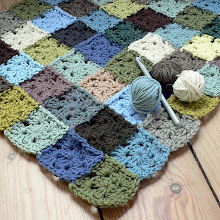
I am now officially addicted to making these little crochet circles, having learned how to do them on You Tube. See this post for more crochet loveliness and a link to the tutorial.

Each one takes an hour or so - quite a bit less if I'm concentrating and rather longer if I'm also watching tv. The yarn is a mixture of Rowan Wool Aran and some other, cheaper yarns, although they all have at least some wool in them. I didn't want to spend a fortune, and for this project I didn't need the yarn to be super duper soft.

I see this turning into a picnic rug, or something to snuggle into while drinking a late-night cup of coffee in the garden. Or perhaps it will end up in my newly decorated spare room (when I get around to decorating it that is). As you can see the colours are my favourite muted beiges, greens and blues with some defining white and a gorgeous chocolate brown.


The great thing about a project like this is that it only takes about six 100g balls of wool, although I'll need to choose another colour for the joining rounds, which I estimate will use another couple of hundred grams. Great fun for autumn evenings!

barbara hepworth says

"Ideas are born from a perfect balance of our conscious and unconscious life and they are realised through this same fusion and equilibrium."


She wrote this in Circle: International Survey of Constructive Art, London, 1937, which is referenced in the book I'm currently reading, The St Ives Artists: A Biography of Place and Time by Michael Bird.

dirty books and funny men in a boat


'Craftworkers adrift in the Ship of Fools' by Sebastian Brant 1494, featured in the preface to Jost Amman: Cuts of Craft-workers, a recent acquisition at Chetham's Library , where I am lucky enough to work on Wednesdays and Fridays. Each craftsman (it's a few hundred years until female emancipation) is identifiable by his tools, and you can see the lovely big scissors of the tailor (who looks a particular buffoon) in the middle boat.


Amman's wonderfully detailed woodcuts were originally published in his Standbuch of 1568, which attempted to offer 'an accurate description of all the classes on the earth'. This new edition, beautifully printed and hand bound by Graham and Kathy at Incline Press , features every imaginable sort of craftworker, from jewellers to tailors to blacksmiths and including this lovely scene of an embroiderer in his studio: notice his tasselled cushion, the skeins of thread and scissors, the abundance of light and fresh air, and the little cat sitting underneath the special table. I can't help thinking about the backache that would inevitably follow lengthy periods of sitting in such an awkward position, though.


My main job at the moment is to catalogue shelves and shelves full of horribly dirty and itchy books mainly dating from the seventeenth and eighteenth centuries. Being a bit of an anorak, I actually enjoy this, especially when we stumble across a volume previously owned by somebody a bit famous. We recently found a book of radical French political thought once owned by Laurence Sterne of Tristram Shandy fame, for example.

However, it's not all slogging away in front of the computer screen. Yesterday one of our oldest and most valuable manuscripts made a rare appearance in the reading room: the Flores Historiarum, or Flowers of History, a latin chronicle of British history written in the thirteenth century and interspersed with the most incredibly beautiful and detailed ink drawings of the coronations of the English monarchs. I had seen reproductions of these before, but never the originals, and I was blown away by the freshness of the colour and the tiny, intricate details. I was lucky enough to spend a very happy half-hour or so exclaiming over its gorgeous pages whilst its history was brought alive to me by my colleague Fergus, who knows about these things (and also makes excellent tea, excels in doing funny accents, and generally makes us all laugh).


Coronation of King Arthur, from "Flores Historiarum," by Matthew Paris, c.1250-52. This is just to give you an idea of how amazing these drawings are, and as usual it goes without saying that this image is copyright, this time of the Bridgeman Art Library, and shouldn't be used for anything other than marvelling at.

especially for lynn

If you read Country Living you will perhaps appreciate that, on a windy day, it is not enough simply to go into the garden and collect a handful of blown-down sticks to light the fire.

Oh no.

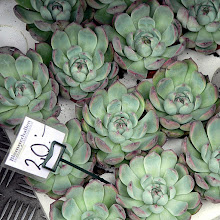
If your heart is truly in the country, you must tie them with twine and prepare a hand-stamped label with which to identify your twigs...

Then, and only then, can you burn them.

morning walk

A fierce wind last night, which rattled and shook all our ancient doors and woefully inefficient sash windows. This morning, more of a softness to the day, but still a stiff warm breeze to galvanise thought and lift the spirits on my walk around the park.

Big, loose drifts of freshly blown plane tree leaves lay waiting for me to kick through with a leathery clatter, and the magpies and crows were jostling and chattering in the middle of the playing field.

To reach our park, circle it twice and return home along the secret footpath takes forty minutes of brisk walking and loosens my back and joints nicely. It's one of those smallish but useful urban parks, bordered on one side by the railway and on another by the wooded grounds of a primary school. It is spacious and green, and is always spotlessly clean. I love it for its enormous, wide open skies and tall trees, and would be lost without it, living as we do only three miles from the city centre. I feel immensely grateful to those forward-thinking Victorian town planners from long ago, and so from the very great distance of over a hundred years, I send out a very big

Thank You.